The marketing world is evolving at lightning speed, and 2026 promises both new hurdles and exciting possibilities for anyone eager to make their mark. If you have ever dreamed of starting a marketing agency, now is the time to seize the opportunity.
With the industry projected to grow rapidly, many founders worry about standing out, building the right team, and keeping up with technology. This essential guide is your roadmap for starting a marketing agency, leading you through every step from defining your niche to scaling your business.
You will learn how to choose your focus, create service packages, streamline operations, attract and keep clients, leverage the latest tech, and prepare for the future. Ready to turn your vision into a thriving agency? Dive in for expert insights and actionable strategies you can use right away.
Understanding the 2026 Marketing Agency Landscape
The marketing industry in 2026 is evolving at breakneck speed. For anyone starting a marketing agency, understanding the latest trends, client expectations, and technological advances is essential for success. Let's explore what sets this landscape apart and how you can stand out.
The State of the Marketing Industry in 2026
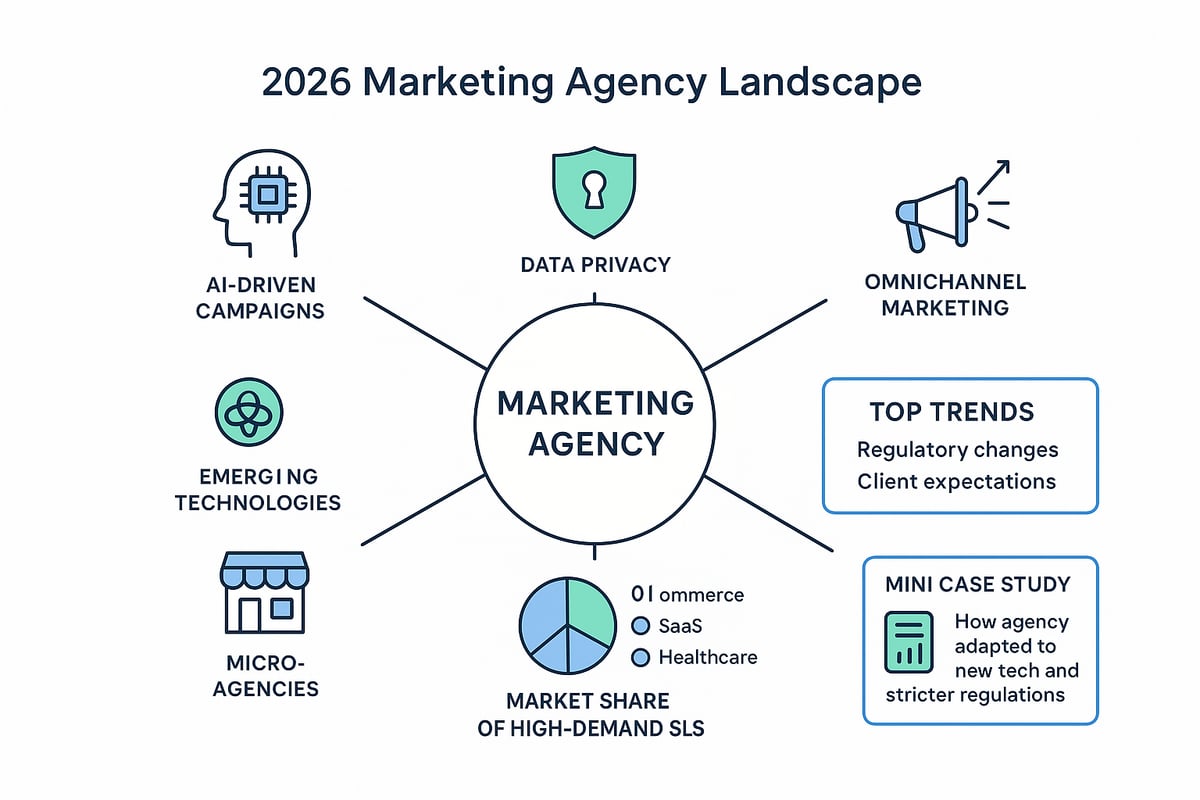
Marketing in 2026 looks dramatically different from just a few years ago. With AI-driven campaigns becoming mainstream, agencies must now harness automation and analytics to stay competitive. If you are starting a marketing agency, you'll need to understand how AI tools can personalize messaging, optimize ad spend, and deliver measurable results.
Data privacy is another major force. New regulations require agencies to prioritize transparency and compliance, making trust a top client concern. Clients now demand clear ROI metrics, open communication, and tailored solutions. Omnichannel marketing is also on the rise, blending social, email, search, and emerging platforms into seamless campaigns.
The industry is seeing a surge in micro-agencies. These small, specialized teams can pivot quickly and offer niche expertise. According to 10 marketing trends to watch out for in 2026, agencies that embraced AI and adapted to regulatory changes in 2024-2025 reported rapid growth and client retention.
What sets leading agencies apart? They leverage automation for repetitive tasks, use advanced analytics to refine strategies, and invest in creative tools to deliver standout campaigns. The most successful teams also keep a close eye on evolving advertising standards, ensuring compliance while pushing creative boundaries.
Consider the example of a digital agency that pivoted to AI-powered services after new privacy laws passed in 2024. By offering automated campaign management and transparent reporting, they doubled their client base in just 18 months. This shows how being proactive about technology and compliance can turn challenges into opportunities when starting a marketing agency.
Identifying Lucrative Niches and Target Markets
Choosing the right niche is crucial for anyone starting a marketing agency. In 2026, high-demand sectors include:
eCommerce
SaaS and tech startups
Healthcare and wellness
Local businesses and franchises
Specialization allows you to become an expert in a specific field, attracting clients who want deep knowledge and proven results. However, generalization can help you diversify and weather market fluctuations. Here’s a quick comparison:
ApproachProsConsSpecializationHigher fees, expertise, loyal clientsSmaller market, risk if niche contractsGeneralizationWider client base, flexibleMore competition, harder to stand out
To identify your ideal market, start with thorough research. In 2026, tools like AI-driven analytics platforms, social listening apps, and industry-specific databases make it easier than ever. Look for gaps in the market, analyze competitor offerings, and use surveys or interviews to uncover client pain points.
For example, a boutique agency in 2025 focused solely on paid ads for local healthcare providers. By hyper-targeting their services and leveraging automation, they quickly built a reputation for delivering fast, data-driven ROI. This approach is a blueprint for success if you are starting a marketing agency and want to stand out in a crowded marketplace.
The landscape is full of opportunity. By focusing on trends, compliance, and targeted research, you can carve out a profitable niche and build a resilient business.
Laying the Foundation: Skills, Certifications, and Team Building
Before you dive into starting a marketing agency, it is crucial to lay a strong foundation of skills and build an effective team. The right mix of expertise, certifications, and teamwork will set your agency up for long-term growth.
Essential Skills for Agency Founders
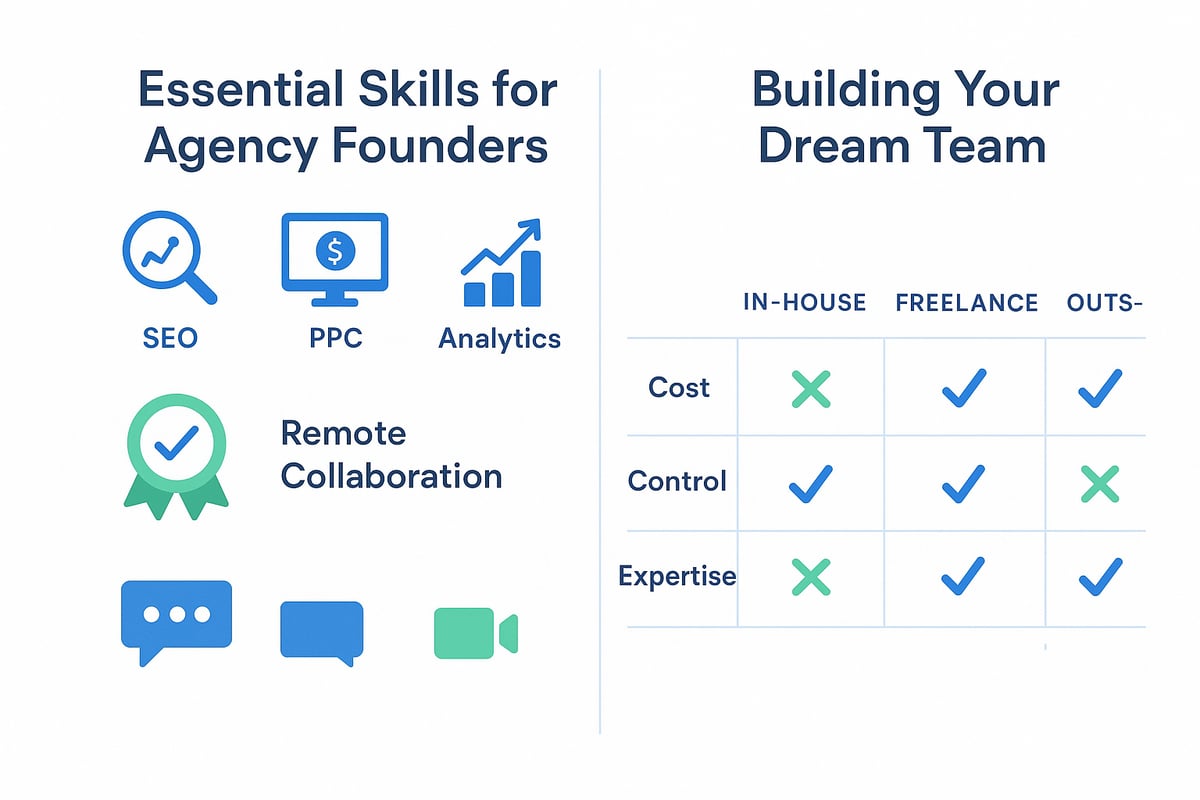
When starting a marketing agency, mastering both hard and soft skills is non-negotiable. Founders need to understand digital marketing fundamentals, including SEO, paid advertising, social media, content strategy, and email marketing.
Analytical thinking is key. You must interpret campaign data and turn insights into strategy. Data literacy helps you spot trends and optimize results, which clients expect in 2026.
Leadership and sales abilities are essential for inspiring your team and winning new business. Client management skills help retain accounts and ensure satisfaction.
Continuous learning is vital when starting a marketing agency. Earning certifications, such as Google Analytics or Meta Blueprint, keeps your knowledge up to date and builds credibility.
Do not underestimate the value of ongoing education. The landscape changes quickly, so founders should regularly invest time in new courses and certifications. For practical help, explore Agency resources and templates to kickstart your learning and operational setup.
Building Your Dream Team
The next step in starting a marketing agency is assembling a team that can deliver results. A typical small agency structure includes roles like strategist, account manager, creative specialist, copywriter, analyst, and developer.
You will need to decide between in-house hires, freelancers, or outsourcing. Each option has pros and cons:
OptionProsConsIn-houseStrong culture, seamless communicationHigher costs, less flexibleFreelanceFlexibility, access to niche skillsLess control, availabilityOutsourcingCost-efficient, scalableQuality varies, time zones
Using remote collaboration tools, such as Slack, Asana, or Google Workspace, makes teamwork smoother and supports productivity. Many successful agencies start lean and scale by combining in-house leadership with specialized freelancers.
When starting a marketing agency, model your team structure for efficiency and growth. For example, a three-person core team partnered with trusted freelancers can quickly adapt as new clients come in.
Step-by-Step: Setting Up Your Marketing Agency in 2026
Starting a marketing agency in 2026 is both an exciting and complex journey. Each stage, from defining your niche to selecting the right tools, requires careful planning and execution. Let’s break down the essential steps, so you can launch with confidence and clarity.
Step 1: Crafting Your Unique Value Proposition
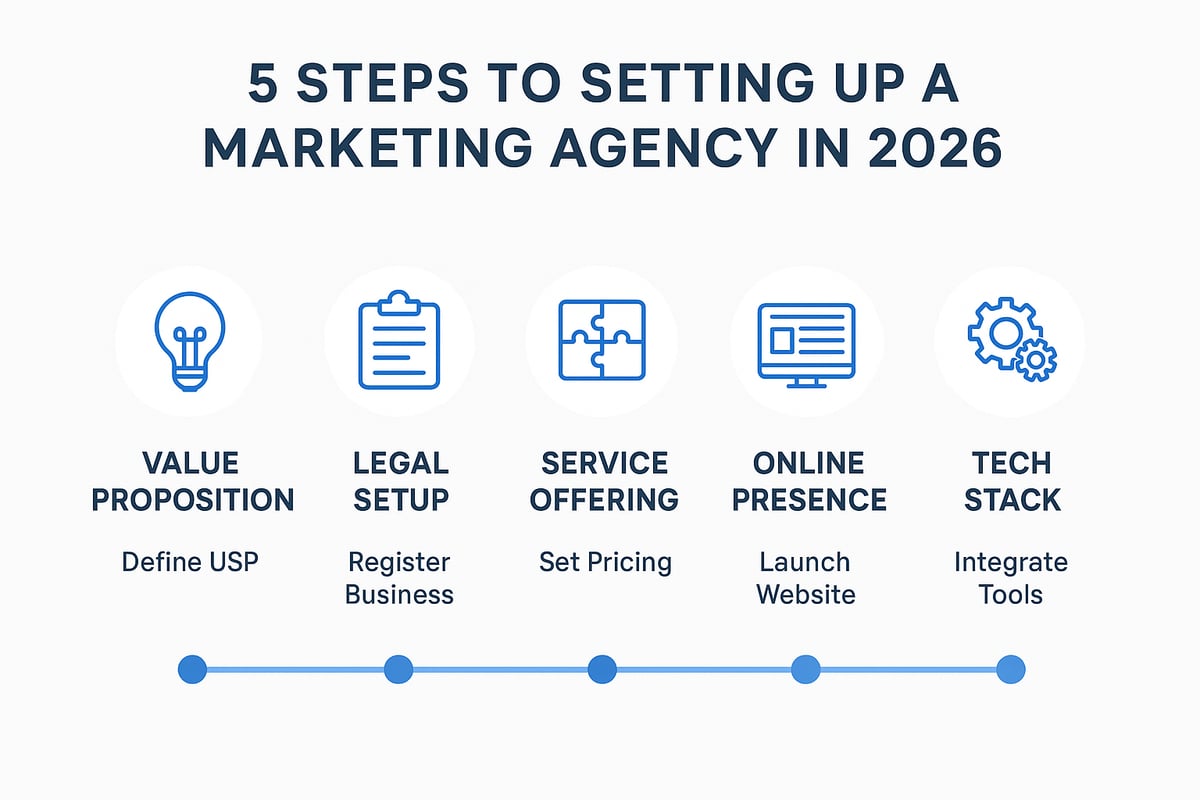
The foundation of starting a marketing agency is a clear and compelling unique value proposition (UVP). Your UVP answers the question: why should clients choose you over the competition? In a crowded 2026 market, differentiation is critical.
Start by identifying gaps in the market and matching them to your strengths. Are you offering faster results, specialized expertise, or a new approach powered by AI? For example, a UVP like “Faster, data-driven ROI for local healthcare providers” directly addresses a niche pain point.
Consider these tips when developing your UVP:
List your core strengths and experiences.
Research competitors to find untapped opportunities.
Align your services with the needs of your ideal client.
Test your UVP with potential clients for feedback.
A strong UVP is the first step in starting a marketing agency that stands out in 2026. Take time to refine your message, as it will shape your brand, sales, and growth strategy.
Step 2: Legal, Financial, and Administrative Setup
With your UVP in place, the next step in starting a marketing agency is ensuring your business is built on a solid legal and financial foundation. The right setup will protect your interests and streamline your operations.
Here’s a quick checklist for a compliant agency launch:
Choose your business structure (LLC, S Corp, or sole proprietorship).
Register your business name and obtain necessary licenses.
Set up a dedicated business bank account.
Implement accounting and tax processes, using software for efficiency.
Secure business insurance and draft client contracts.
Stay updated on compliance and data privacy regulations for 2026.
A clear administrative setup reduces future headaches and builds trust with clients. Remember, starting a marketing agency with proper legal and financial processes helps you scale smoothly and avoid costly mistakes.
Step 3: Developing Your Service Offering and Pricing Model
Defining your service offering is a critical milestone when starting a marketing agency. The most in-demand services in 2026 include SEO, paid advertising, content marketing, automation, and analytics.
Think about how you will package these services. Will you offer monthly retainers, project-based pricing, or performance-based fees? Competitive research helps you position your pricing effectively.
Here’s a comparison table for common pricing models:
Pricing ModelProsConsRetainerPredictable incomeMay limit flexibilityProject-BasedClear deliverablesRevenue can be inconsistentPerformance-BasedAligns with client goalsRiskier, harder to forecast
Boutique agencies often use tiered packages, while full-service agencies may opt for custom quotes. Test your pricing with early clients and be ready to adjust as your agency grows.
Step 4: Building Your Brand and Online Presence
A memorable brand and robust online presence set the stage for attracting clients when starting a marketing agency. Your brand identity should reflect your UVP and values, from your logo to your website’s tone.
Essential features for your agency website in 2026 include:
Fast load times and mobile responsiveness
Clear service descriptions and case studies
Integrated lead capture forms and chat support
Blog or resource section for thought leadership
Social proof such as testimonials and certifications
Beyond your website, build your authority through social media, webinars, and content marketing. Leveraging Lead generation tools for agencies can help you identify and connect with potential clients more efficiently.
Thought leadership is key. Host webinars, publish insightful articles, and engage in industry discussions. These actions not only build trust but also drive inbound leads to your agency.
Step 5: Selecting the Right Tech Stack
The right technology stack is vital for efficiency and scalability when starting a marketing agency. In 2026, agencies rely on a blend of CRM, project management, analytics, and automation tools.
Consider these categories for your tech stack:
CRM for managing leads and clients
Project management platforms for collaboration
Analytics dashboards for real-time data insights
Automation tools for campaign management and reporting
Evaluate platforms that offer AI-driven features and seamless integrations. This will save you time and enhance your ability to deliver measurable results. Compare options based on cost, scalability, and support.
A modern tech stack allows your agency to deliver consistent, high-quality service, giving you a competitive edge as you scale.
Attracting and Retaining Clients in a Crowded Market
Standing out and winning business is one of the biggest challenges when starting a marketing agency in today's saturated marketplace. Competition is fierce, and clients have more choices than ever. Building a reliable system for attracting and retaining clients is essential for survival and growth.
Lead Generation Strategies for 2026
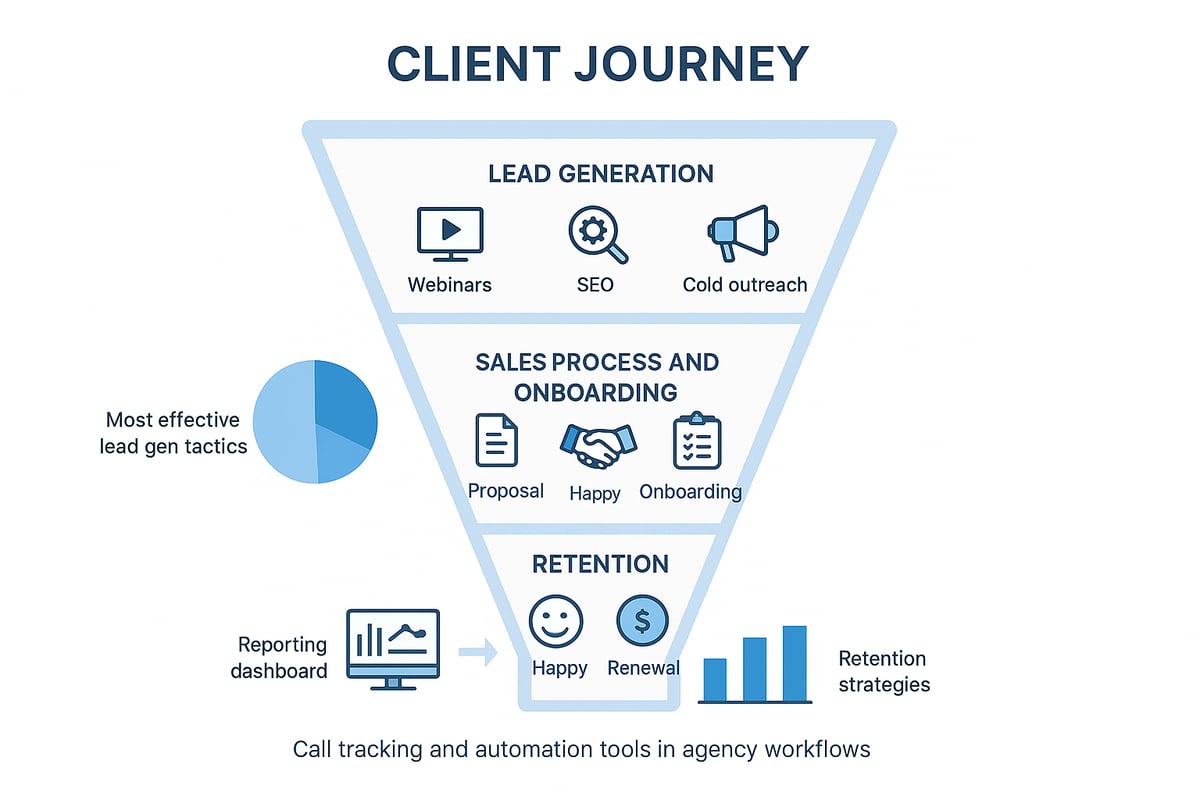
To thrive when starting a marketing agency, you need modern, multi-channel lead generation. In 2026, inbound marketing remains king. Content marketing, SEO, webinars, and podcasts attract prospects searching for expertise. Webinars, in particular, are powerful for building authority and capturing leads at scale.
Outbound efforts like cold email, LinkedIn outreach, and targeted networking still play a key role. The difference now is personalization. AI-driven tools let you segment and tailor messages for higher response rates, which is crucial when starting a marketing agency in a competitive environment.
Partnerships and referrals amplify reach. Collaborate with complementary businesses or industry influencers to tap into established trust networks. Agencies that grew from 0 to 10 clients in months often cite webinars and partnerships as their secret weapon.
Measuring every touchpoint is vital. Utilize tools like call tracking to attribute leads and demonstrate ROI to clients. For a detailed overview, check out these accurate call tracking strategies that can help agencies prove campaign effectiveness.
Finally, experiment and iterate. The tactics that work best for starting a marketing agency may shift as platforms evolve. Stay agile, track results, and double down on what delivers consistent, high-quality leads.
Perfecting the Sales Process and Client Onboarding
Once you attract leads when starting a marketing agency, converting them into clients requires a refined sales process. Consultative selling is the foundation. Begin by understanding each prospect's goals, challenges, and unique needs. This builds trust and positions your agency as a problem solver, not just a vendor.
Craft compelling proposals using real data and case studies. Highlight measurable results and tailor your pitch to the prospect's industry. Visuals and concise summaries make proposals stand out, especially in a crowded market.
Onboarding should be seamless. Automated onboarding workflows impress clients and accelerate project kickoff. Use digital forms, welcome kits, and onboarding checklists to guide new clients step by step. This reduces friction and ensures everyone is aligned from day one.
A streamlined onboarding process is essential for starting a marketing agency that wants to scale. It sets the tone for your working relationship and minimizes misunderstandings. Agencies that invest in automation report faster ramp-up times and higher client satisfaction.
Remember, every touchpoint matters. Prompt responses, clear communication, and a friendly approach set your agency apart in a sea of competitors. The smoother your sales and onboarding, the more likely you are to secure long-term partnerships.
Delivering Value and Building Long-Term Relationships
Delivering value is the heart of retaining clients after starting a marketing agency. Regular, transparent reporting keeps clients informed and builds trust. Use dashboards to show progress on KPIs and explain how your actions drive results.
Communicate ROI in simple terms. Clients want to see how your work impacts their bottom line. Schedule monthly review calls to discuss wins, challenges, and next steps. This proactive approach prevents surprises and demonstrates your commitment.
Handling feedback gracefully is key. Encourage clients to share thoughts and concerns. Respond quickly and implement changes to show you value their input. This reduces churn and fosters loyalty.
Retention strategies include loyalty programs, periodic strategy reviews, and value-added services. Agencies that focus on relationship-building see higher lifetime value from each client. When starting a marketing agency, prioritize long-term results over quick wins.
In summary, success comes from consistently exceeding expectations, adapting to client needs, and staying ahead of industry trends. These habits turn new clients into loyal advocates who fuel your agency's growth.
Leveraging Automation, AI, and Productivity Tools
The way agencies operate is evolving quickly. For anyone starting a marketing agency in 2026, embracing automation, artificial intelligence, and top productivity tools is no longer optional, but essential for growth and competitiveness. Let us explore how these innovations are transforming agency operations and what you need to stay ahead.
The Role of Automation and AI in 2026 Agencies
Automation and AI are rewriting the rulebook for starting a marketing agency in 2026. Agencies now automate routine tasks like reporting, scheduling, and campaign management, freeing teams to focus on strategy and creative work.
AI-driven tools analyze data in real time, optimize ad spend, and personalize campaigns at scale. Chatbots handle client queries 24/7, improving client satisfaction and reducing manual workloads. Imagine configuring a campaign and letting AI handle A/B testing, audience targeting, and even creative tweaks based on live data.
Benefits of automation and AI include:
Faster campaign launches and optimizations
Enhanced accuracy in analytics and forecasting
Scalable client communication via AI chatbots
A growing number of agencies are leveraging these technologies to gain a competitive edge. According to Top Advertising & Digital Marketing Trends in 2026: AI & Search, AI is now central to campaign creation, optimization, and measurement. Agencies that adopted AI early have cut campaign setup times in half and consistently deliver better results for clients.
As you consider starting a marketing agency, remember that automation is not just about saving time, but about unlocking new levels of creativity and service.
Must-Have Productivity Tools for Modern Agencies
Selecting the right productivity tools is vital when starting a marketing agency. Modern agencies rely on integrated platforms that streamline project management, automate audits, and deliver real-time reporting.
Here is a quick overview of essential productivity tools:
Tool TypeExample FeaturesBenefitsProject ManagementKanban boards, task automationKeeps teams alignedAnalytics DashboardsGA4, Looker, Tableau integrationsInstant insights, clear ROIAudit AutomationScheduled site and campaign auditsSaves hours, boosts accuracyCollaboration HubsFile sharing, chat, video callsEnables seamless teamwork
Consider a case study: An agency adopted automated project management and audit tools. Within months, billable hours increased by 20%, and client reporting went from days to minutes. These tools remove bottlenecks, ensuring you deliver results faster as you are starting a marketing agency.
Do not underestimate the impact of the right tech stack. A well-chosen set of tools will help you scale, deliver value, and maintain a competitive edge in 2026.
Managing Remote Teams and Global Clients
Remote work is now standard for agencies, especially for those starting a marketing agency with global ambitions. Managing distributed teams and clients across time zones requires a thoughtful approach and the right technology.
Key tools for remote agency operations include:
Virtual collaboration platforms like Slack, Microsoft Teams, or Zoom
Time zone management apps to schedule meetings with global clients
Cloud-based file storage for secure, real-time access
Best practices for remote agencies:
Set clear communication guidelines and regular check-ins
Use shared dashboards to keep everyone aligned on goals and progress
Offer flexible hours to accommodate client and team needs
One agency scaled internationally by standardizing their processes with cloud-based collaboration tools. They delivered projects efficiently, impressed clients with timely updates, and built a reputation for reliability.
When starting a marketing agency today, building a remote-ready infrastructure is essential for success and future growth.
Scaling and Future-Proofing Your Agency
Growing and sustaining success after starting a marketing agency requires forward-thinking strategies. Future-proofing means building systems that adapt, scale, and thrive as the industry evolves. Let’s explore key areas to ensure your agency remains competitive and resilient.
Building Scalable Systems and Processes
The foundation for scaling after starting a marketing agency is robust, repeatable processes. Standard Operating Procedures (SOPs) bring consistency, reduce errors, and allow new team members to onboard quickly.
Delegation is another pillar. As your agency grows, identify non-core tasks and either outsource or automate them. This frees up leadership to focus on strategy and client relationships.
Efficient onboarding and delivery workflows are essential. Automating these processes ensures every client receives the same high-quality experience and helps your team manage more projects without sacrificing service.
Consider the example of an agency that grew from a 3-person team to 30 employees in just two years. They attributed their rapid scaling to well-documented SOPs, clear delegation, and technology-driven onboarding. When starting a marketing agency, laying this groundwork early positions you for sustainable growth.
Expanding Service Offerings and Revenue Streams
Diversifying your agency’s services is key to staying relevant and boosting revenue. After starting a marketing agency, look beyond core offerings to find new opportunities.
White-label partnerships let you offer specialized services—like advanced PPC or SEO—without hiring in-house experts. This approach helps you scale efficiently and meet client needs as they evolve. For a deeper look at these options, explore white-label services for agencies.
Productizing services, such as creating workshops or digital templates, adds passive income streams. Partnering with other agencies or tech providers can expand your reach and credibility.
One agency doubled its revenue by introducing white-label PPC alongside its original content services. By tapping into new markets and leveraging trusted partners, you can grow faster and build resilience when starting a marketing agency.
Adapting to Industry Changes and Continuous Learning
The marketing world never stands still. Agencies that monitor trends, adapt quickly, and invest in ongoing learning stay ahead of the curve. After starting a marketing agency, commit to regular industry research and upskilling for your team.
Keep a close eye on emerging regulations, evolving client expectations, and advances in AI or automation. Building a culture of innovation and agility ensures your agency can pivot when needed.
A great way to stay informed is by reviewing expert insights like The 6 Marketing Trends to Watch in 2026. These resources help you anticipate shifts in social, commerce, and technology.
Agencies that survived recent disruptions did so by quickly pivoting their services and retraining staff. Continuous learning and adaptability are must-haves for anyone serious about starting a marketing agency with long-term success in mind.
Measuring Success and Optimizing for Growth
Scaling is not just about getting bigger—it’s about getting better. After starting a marketing agency, define clear metrics for success and use them to drive decision-making.
Key Performance Indicators (KPIs) to track include client retention, Net Promoter Score (NPS), revenue per client, and campaign ROI. Use dashboards for real-time insights and to spot areas for improvement.
Here’s a quick reference table:
KPIWhat It MeasuresWhy It MattersClient Retention% of clients retainedIndicates satisfaction, loyaltyNPSClient satisfactionPredicts referrals, growthRevenue per ClientAverage client spendReveals account growth potentialCampaign ROIReturn on investmentProves campaign effectiveness
Dashboards make it easy to set and track quarterly or annual growth targets. One agency used dashboard-driven management to spot trends early and optimize their services. When starting a marketing agency, these data-driven habits ensure you scale with purpose and direction.
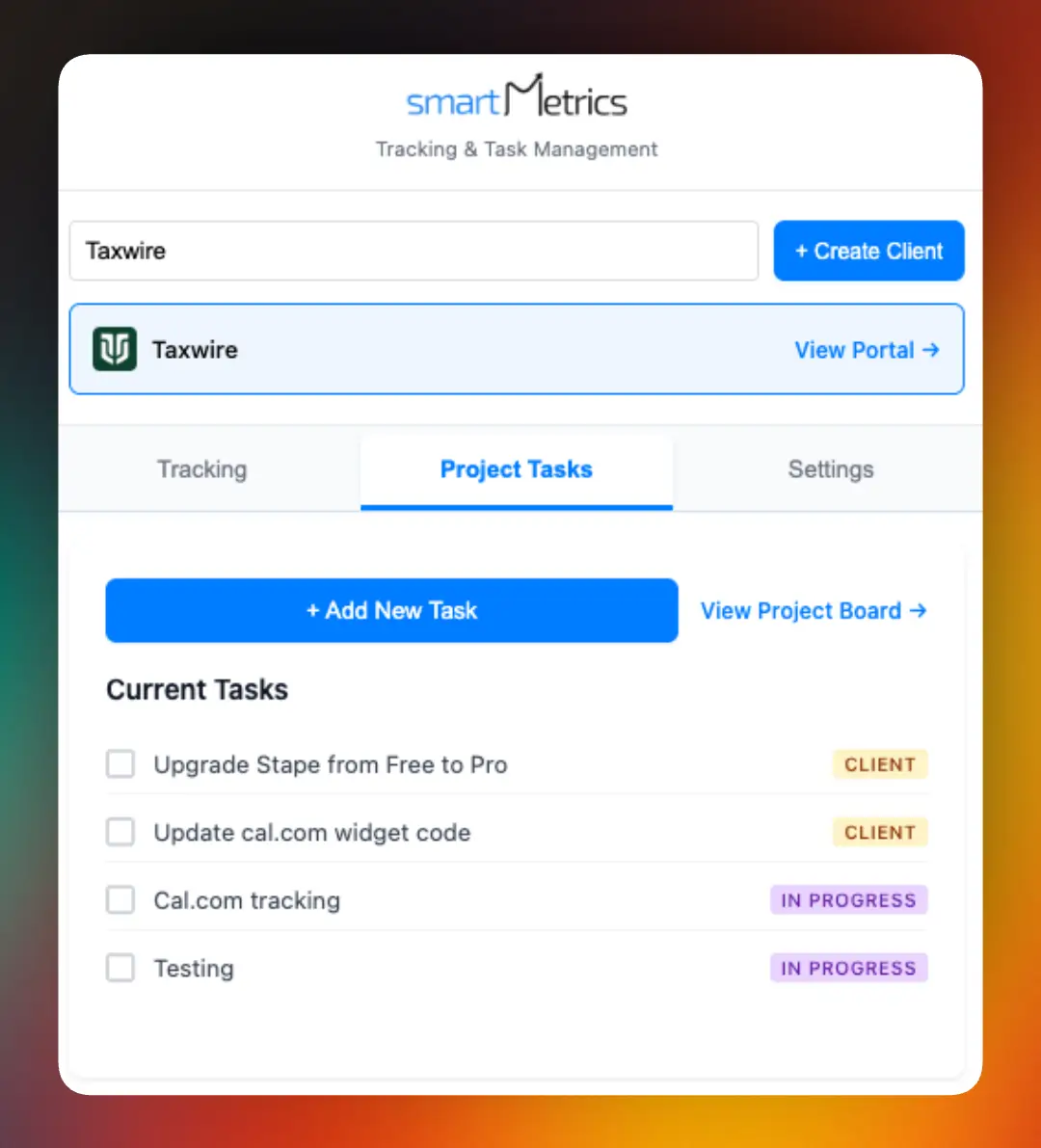
You’ve made it this far and now you have a solid grasp on what it takes to launch a marketing agency in 2026—from choosing your niche to building a team and leveraging the right tech. If you’re eager to put these steps into action without getting bogged down by busywork or clunky processes, I highly recommend exploring tools that help you work smarter. With SmartMetrics, you can streamline your workflow, wow clients with custom portals, and boost your agency’s efficiency from day one. Ready to see how it all works? Get Started for Free
Article written using RankPill.




 Gray Digital Group
 Blitzy
 PermitFlow
 Dj Haer Jr