You still buy Google Ads. You still run Meta. You still want SEO to put demos, calls, and orders in your CRM.
What changed is the middle. More buyers ask an AI agent to compare options, shortlist vendors, and sometimes start the purchase. The person who used to see your search ad may never open the results page. The agent does.
Ads do not die overnight. Money still moves through impressions, clicks, recommendations, and completed transactions. Your job is to stay visible to humans and machines, and to keep closed-won truth in your CRM when the click trail goes quiet.
What actually shipped (not the stock chat)
Meta launched Muse in September 2026 as a personal agent that works across apps, books, fills forms, and can check out with Stripe Link. At Connect, Mark Zuckerberg said Muse stays free for a large token allowance, with Meta expecting to profit later by taking a small fee from transactions. Shopping connectors include Shopify's catalog, payments partners, and retailers such as Best Buy, Gap, Sephora, Walmart, and Wayfair. The fee rate and merchant terms are not public yet. The direction is clear. Meta wants a cut when the agent finishes the job.
Google is building agentic shopping inside Search. At I/O 2026 it introduced Universal Cart, an intelligent cart that follows shoppers across Search, Gemini, YouTube, and Gmail. It sits on Google's Universal Commerce Protocol and Agent Payments Protocol. Brands stay the merchant of record. Checkout can use Google Pay or hand off to the merchant. Alphabet's Q2 2026 remarks still showed Search and Other revenue up 17% year over year, with AI Mode past 1 billion monthly active users and AI features sending billions of clicks to sites each week. Google is not abandoning ads. It is folding agents into the same distribution system that already sells them.
OpenAI's Instant Checkout, launched in 2025, showed the other side of the story. By early 2026, OpenAI and major merchants shifted toward merchant-controlled apps and checkout after weak in-chat conversion. Walmart publicly said in-chat conversion ran about three times lower than click-out. Etsy saw limited sales volume but still valued discovery traffic. Agents can be strong for research and weak for the final buy.
Amazon drew a harder line. In September 2026 it blocked Muse from shopping on Amazon.com, citing unauthorized agent access and Conditions of Use. It has also fought other shopping agents and tightened crawler rules. Big retailers will not always let someone else's agent own their storefront.
For you as an advertiser, the map looks like this. Meta can pull mid-funnel attention from social context into agent-assisted purchase. Google still owns huge search and shopping distribution, even as the path from query to buy gets more agent-shaped. OpenAI-style assistants may drive discovery more than closed sales. Walled gardens will keep some inventory off-limits to third-party agents.
What this does to paid search, paid social, and SEO
Paid search does not vanish because an agent exists. Someone still has to pay for attention, placement, or a completed sale. What changes is who is persuaded. The agent may summarize three options and never show your text ad. Sponsored recommendations inside AI answers, merchant feeds, and transaction fees become part of the media mix.
Paid social may gain where intent starts in a reel, a comment, or a saved product. An agent that turns that social cue into a shortlist or a cart is a new handoff, not a free ride. If Meta monetizes completed transactions, your creative and catalog quality matter as much as your CPM.
SEO still matters, and the work shifts. Classic rankings help humans and still feed many AI systems. Generative and answer-style engines also need clean facts they can cite. That is the GEO and AEO work marketers talk about in 2026. Structured product and service data, clear FAQs, accurate specs, and pages that answer specific questions raise the odds that an overview or an agent names you correctly.
The hard part for pipeline owners is measurement. When a buyer arrives from an AI summary with no UTM, platform "conversions" and last-click reports get noisy. Your CRM still has to record who closed, for how much, and from which offer.
Three scenes that already feel familiar
These are fictional, but they match how teams are starting to report weird gaps.
The HVAC company whose Google leads thinned while Instagram kept ringing
A local HVAC firm ran branded and service Google Ads for years. Form fills slowed in late summer even though their CPC looked stable. Calls from Instagram DMs stayed busy. Several callers said a friend had Muse or another assistant pull three local companies that offered same-week tune-ups and financing. The firm's Google Ads dashboard still showed "search demand." The CRM showed fewer paid-search-sourced opportunities and more "social / unknown" deals that closed fine. They were not out of demand. The discovery path moved, and their service pages did not spell out financing, response time, or service area in machine-readable detail.
The SaaS team whose CPC looked fine while closed-won went orphan
A B2B SaaS company kept Search and LinkedIn spend flat. Cost per click held. Demo requests from classic ads dipped slightly. Closed-won in HubSpot did not. Sales kept hearing "we shortlisted you in ChatGPT" or "Gemini said you support SSO and HIPAA." Those deals often landed as Direct or Organic with empty campaign fields. Marketing still trusted Google Ads conversion columns. Finance trusted CRM revenue. The two stories stopped matching. The fix was not more ad budget. It was first-party attribution rules, salesperson source capture, and content that stated security and pricing facts agents could quote without inventing them.
The ecommerce brand agents misread because the real specs lived in PDFs
A specialty gear shop had beautiful product photography and thin HTML specs. Dimensions, materials, and compatibility sat in downloadable PDFs. Humans managed. Shopping agents and AI product answers often skipped them or guessed wrong. Returns rose on "not what I expected" orders that came through AI referrals. Merchant Center and on-page schema fixes cut the mismatch. Feed quality became a sales issue, not only a Shopping Ads chore.
What to do this week
Run this as an ops checklist, not a strategy retreat.
- Audit product and service facts agents can read. Put dimensions, pricing rules, service area, turnaround, certifications, and exclusions in HTML and schema, not only in PDFs or sales decks.
- Tighten Merchant Center, catalog, and CRM product names so ads, landing pages, and agent connectors describe the same SKU or service.
- Add or refresh FAQ blocks that answer the exact questions buyers ask agents (warranty, compatibility, onboarding time, who you do not serve).
- Stop treating platform conversions as closed-won. Require a CRM stage for opportunity source, including "AI assistant / agent" and free-text when the path is unclear.
- Segment AI referral hosts in analytics (ChatGPT, Gemini, Perplexity, and similar) and join those sessions to CRM deals weekly.
- Review landing pages for both humans and agents. Clear offers, visible pricing bands or "starts at," and contact paths beat clever copy that hides the answer.
- Decide which marketplaces and retailers you rely on. If a major store blocks third-party agents, your brand still needs a direct, agent-readable path on your own site.
Keep your CRM as the scoreboard
Agents will keep improving. Platforms will keep testing fees, sponsored answers, and carts that never visit your homepage. Your paid search and Meta budgets still buy attention. SEO and GEO still buy citation. None of that replaces a clean CRM that shows which leads became revenue.
If your ads look healthy while pipeline attribution falls apart, the leak is usually tracking and handoff, not "the algorithm hates us." Fix the measurement first. Then decide where to spend.
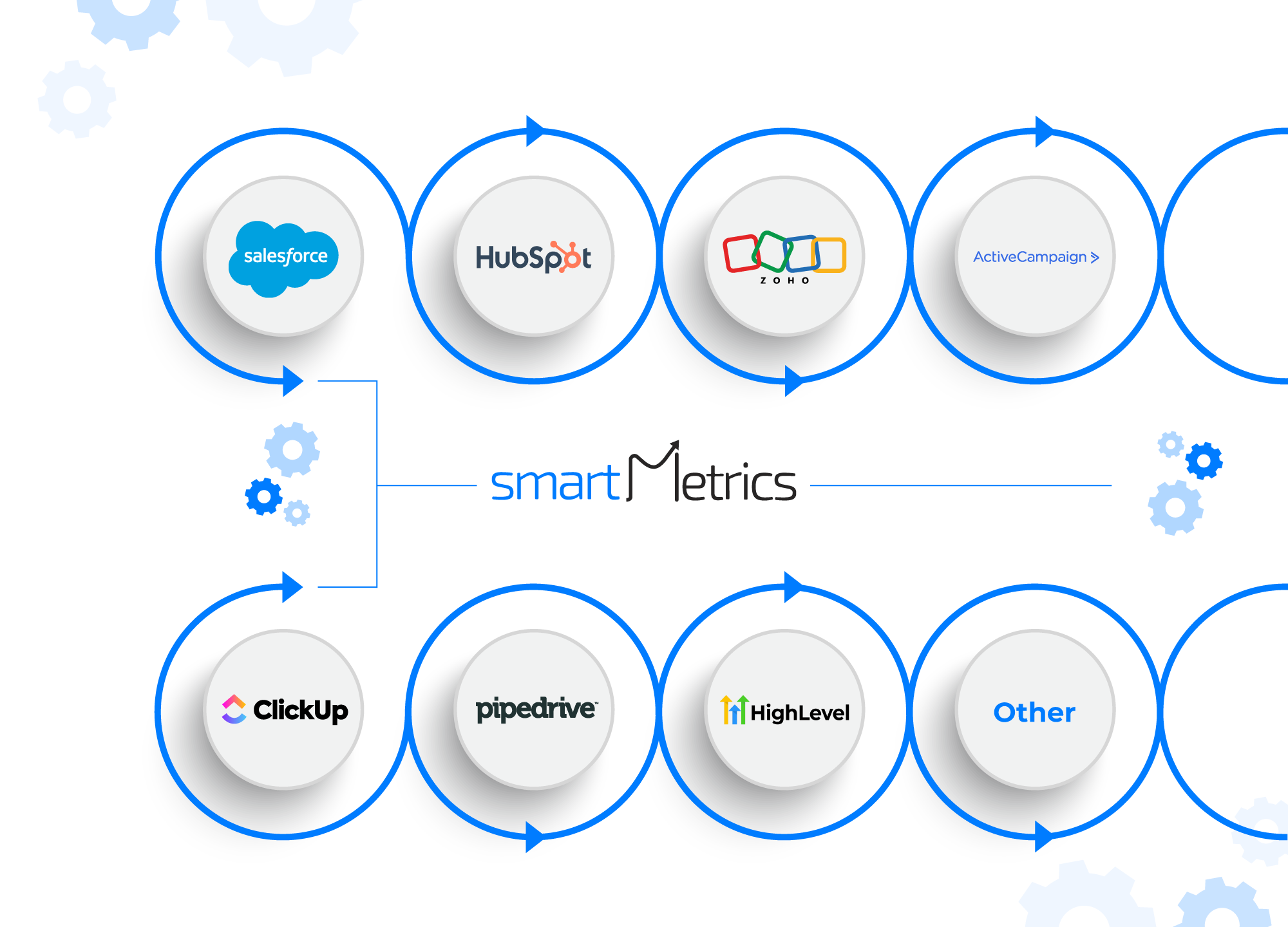
SmartMetrics helps owners and marketing teams keep Google Ads, Meta Ads, analytics, and CRM attribution honest across Zoho, HubSpot, Salesforce, Attio, and Workiz. If you want a pass on tracking integrity and how agent-shaped traffic should land in your CRM, bring your current stack and we will map the gaps.



 Gray Digital Group
 Blitzy
 PermitFlow
 Dj Haer Jr